

 Rated Excellent




Is your mortgage affordable? – Bills Spiraling
Buying a property is one of the biggest financial decisions anyone will make in their life. Failure to keep up payments can ruin your finances and even lead to you losing your home.
No one takes on the cost and the responsibility of a mortgage expecting that they won’t be able to pay. Sometimes, however, circumstances change and a once affordable mortgage that was borrowed responsibly becomes unsustainable. Many of our clients we see at are people who have borrowed responsibly, but through no fault of their own have found themselves in a situation where they simply cannot afford to meet their monthly repayments.
In these circumstances many customers solve their financial problems by selling their property, lowering their cost of living and relieving themselves of extreme anxiety. National Homebuyers can help.
Speak to one of our property experts if you are finding your property unaffordable. Call us free on 0800 443 911
https://www.nationalhomebuyers.co.uk/ #realestate #property #investment #realestateagent # #home #newhome #homesforsale #housing #house #mortgage #propertymanagement #homeforsale
Are Bungalows a Good Investment?
Are Bungalows a Good Investment?
The times of bungalows being purely for people who need easy access and no stairs have changed. Of course, the immediate benefit of access and space are major reasons why bungalows are a good investment.
However, there are further great advantages about bungalows which suit property buyers of all ages. Single storey living may not work for everyone, but let’s address some questions about bungalows.
Should I buy a bungalow?
It is a common debate home buyers go through, on whether a house or bungalow is best for them. There are a variety of reasons you should consider both. Firstly, you need to assess whether a bungalow will work for you.
This means deciding what you need from your next property and what you want from it, too. Bungalows tend to be in quieter neighbourhoods. If you want or need, peace and quiet, a bungalow could be a great option.
However, if you need the separation from living and sleeping accommodation that an upstairs and downstairs provides, going for a bungalow may be a mistake.
Are bungalows a good investment?
Generally, bungalows make for a profitable investment.
Why is this?
Fewer bungalows are being built, this is for the simple reason developers do not see single storey properties as an effective use of land.
However, the demand for single-storey property from buyers remains. In the market, this means bungalows tend to hold their value and may experience faster growth than other types of property.
What to look for when thinking about buying a bungalow.
Unlike other types of property, there are a few things to look out for when thinking about buying a bungalow.
Getting a mortgage approved on a bungalow can be long drawn out and sometimes problematic if the building is built using ‘non-standard’ construction methods.
At your viewing of a bungalow, it is important to consider the following:
- The materials used to construct it
- The year it was built
- How much it has been standardised, by replacing non-standard materials with common ones
Some bungalows were built using prefabricated concrete frames and no cavity walls – these can be difficult to mortgage. These are known as Woolaway bungalows.
Another ‘non-standard’ construction method is building with timber frames; these are called Colt bungalows. Although these are not standard methods, it may be easier to get a mortgage on these than a Woolaway bungalow.
Are bungalows a good investment as a buy-to-let?
As demand is strong, bungalows can make a great option for buy-to-let investors. Trends show that renters too, have switched their demands more towards outdoor space in the wake of the Covid-19 pandemic. Large bungalows generally offer this in abundance.
As many bungalows are often on large plots, it means they have great potential to add value. Extensions are usually a great way to add square footage and, in the process, much more value.
The Benefits of Bungalows
Space, access and privacy
Bungalows tend to come with more space as most were built before 2000. After this time, developers turned to a trend of fitting lots more properties onto plots of land.
With larger plots of land, it means bungalows tend to have more space between properties and therefore, more privacy.
Large gardens are usually a feature of single-storey properties and as they are usually built with other bungalows, the nature of the property height means the gardens are less overlooked.
A great advantage is that a bungalow really can be a forever home, as being a single-storey means it will be suitable for you in later life as it is now.
Bungalows are great for kids
Stairs and young children do not generally mix well and if you have young kids, you will know that you only need to turn your back for a second for an accident to occur.
Having a bungalow means you can keep an eye on the little ones more easily, while the large gardens associated with them, are great for youngsters to explore and play safely at the same time.
Less Maintenance
After owning larger houses for many years, older people often choose bungalows because they demand less maintenance. In addition, vacuuming stairs may be arduous work, therefore the single-storey property is often favoured for older people.
Roofs and guttering are much lower on a bungalow, thus giving easier access than you would have with a house. Routine maintenance of a bungalow’s roof and guttering is much less daunting than compared to a larger house.
Scope to Extend and Modify
Open plan living has proved a popular trend and there are no signs of this being bucked.
If you own a bungalow, the style of interior design of open plan living is easier to achieve, than it would be with a two or three-storey house. This is because there are fewer supporting walls in a bungalow, this means achieving an open plan feel is much easier.
In addition, if you need more space, an extension into a large back garden to create a stunning open plan kitchen is usually straightforward. The large garden means there will be plenty of space left outside too.
Quiet Neighbours
The neighbourhoods where bungalows are tending to attract older property buyers, meaning they are quieter areas with less cars on the road, which also leads to fewer cars with more spaces to park and less noise. The space between properties also contributes to quietness, as does the fact that most bungalows are detached.
The Cons of Bungalows
High Demand, Low Supply
As bungalows are hugely popular, there is generally a high demand. Fewer bungalows are built, especially now with developers maximising land to develop, with less single-storey property being built.
Finding a bungalow that suits your needs can be a tough ask and even if you do uncover your dream one-storey home, you might end up paying a premium for it to fend off rival buyers.
Lack of Living / Sleeping Separation
There is less separation between the living area and bedrooms in a bungalow. If you have children trying to sleep you may find noise traveling through the house disturbs them. This can also be an issue if a family member wakes earlier than others.
Renovation Is Often Needed
Younger buyers may often find a lot of decoration and moderation is needed as the properties tend to be previously owned by older people. This does not always have to be perceived as a negative, of course, but it will mean that costs are incurred bringing a property up to scratch.
Security Worries
Let’s face it, most people like to sleep with a window open in the summer, but this can cause security worries for those living in bungalows due to sleeping on the ground floor.
Some people do not like sleeping on the ground floor full stop – and if you feel that way, a bungalow is almost certainly not the right option for you.
Houses Are Usually Better Value
As we have already established, a lack of supply compared with demand commands a premium for bungalows. This may mean you end up paying more per square foot than were you to buy a house.
With some bungalows, you could end up paying the same price as you would for a house, in terms of the plot of land it sits on, yet you will be receiving far less square footage for your money.
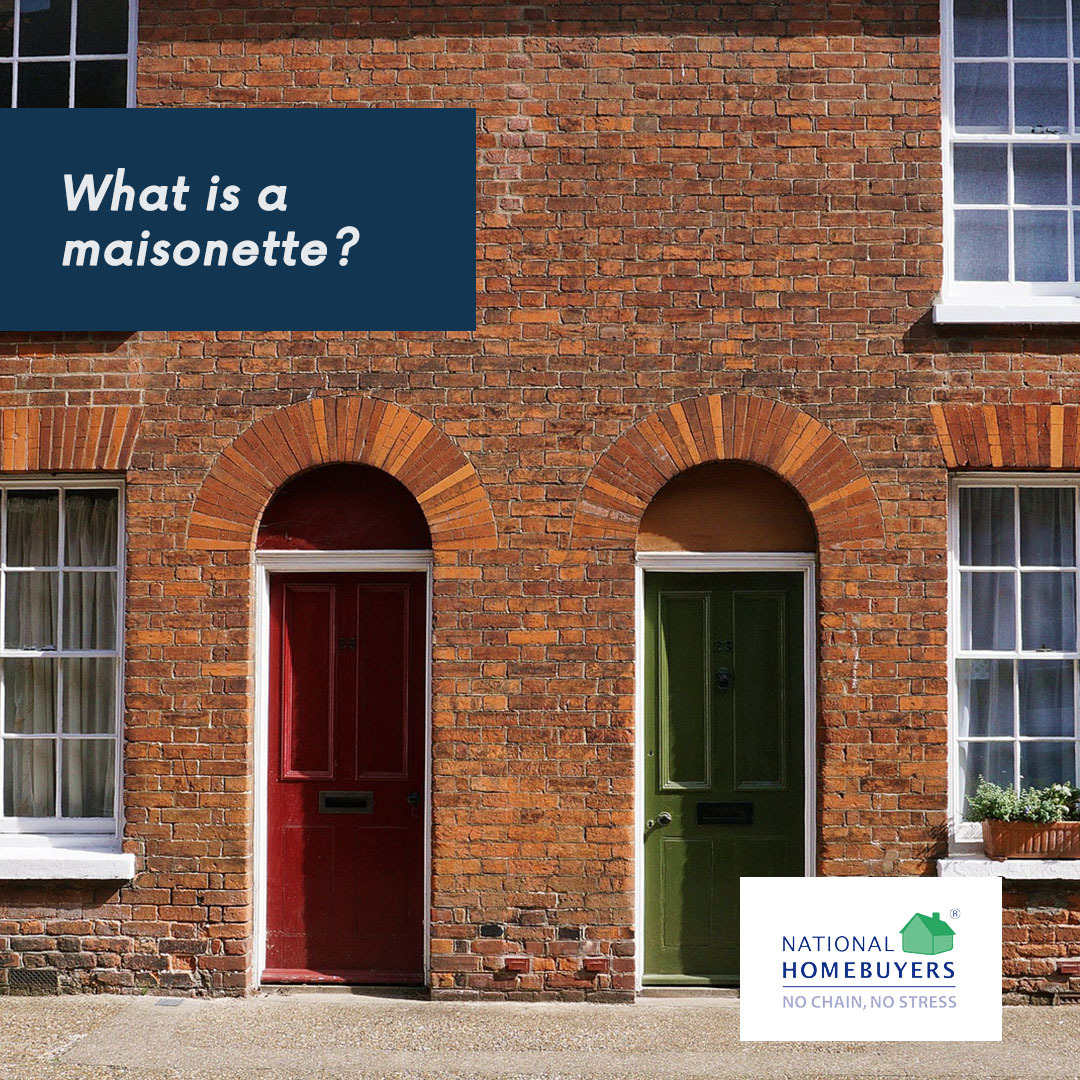
What is a maisonette?
When you’re buying or selling a home, it’s easy to get tripped up by seemingly common words and phrases. Especially if the meaning is changed in different countries. So what is a maisonette? And how is it different from a house or flat?
They’re most often found in larger cities, including London. And can vary from Victorian properties to modern examples, which can be purpose built or the result of a conversion. So, what are the things you need to consider if you’re buying a maisonette as your next home?
What is a maisonette?
In the UK property market, the term maisonette refers to a self-contained two-floor flat in a larger building, with a private entrance and staircase. You’ll often find them located over shops, garages, or with other maisonettes, particularly when they were commonly introduced into suburban parts of the UK in the 1960s and 1970s.
Similar properties can also be referred to as apartments, but this will tend to refer to high-end luxury dwellings. So, you’ll tend to see apartments in expensive city centres, and maisonettes slightly further out, or in areas with high student populations.
But different countries will apply other definitions. The word maisonette comes from French and means ‘little house’. As a result, many small dwellings including holiday cottages can be classed as maisonettes.
Whereas in America, a split-level flat is often referred to as a duplex. And they’re most commonly found as the top floor penthouse within a high-rise building.
And in Scotland, a maisonette is actually one of a group of duplex flats which will be located within a housing block and accessed via a communal entrance.
What are the differences between maisonettes and flats?
The biggest key difference between a flat and a maisonette is that the first will be contained on a single level, compared to two floors in the latter. And most flats will rely on a communal main entrance and staircase.
A maisonette has a private front door, and may also include a private garden and garage. You’ll often find that they’ve been converted from a large period terraced or semi-detached property. But even with the extra space and amenities, they’re classed as more affordable living. You’ll tend to find them on offer for around 20-25% less than buying the equivalent space as separate flats or an apartment.
This means you get extra space and privacy, along with bonus storage space. Conversions tend to be more bespoke than flats, and there may be the possibility to extend an upper maisonette with a loft conversion, or a lower maisonette with an extension.
What are the differences between maisonettes and houses?
A maisonette shares many of the same advantages as buying a house, but with a lower purchase price and running costs. You get the benefits of two floors, a private entrance directly outside, and potentially a garden or garage.
But there are limitations to buying a maisonette, as it’s rare to find an example with more than two bedrooms. And while a house owner has ‘permitted development rights’ for certain types of work, potentially including loft conversions and small extensions, these won’t apply to maisonettes. So, you’ll need to apply for planning permission. If you’re not the sole freeholder for the building, you’ll also need to get their agreement for work to be done.
And while disruptive neighbours may be less of an issue than in a single-floor flat with communal spaces, they can still be an issue. Especially if you’re located above a business like a restaurant or takeaway, which could be producing smells and disruption late into the night.
Maisonettes with a shared driveway or no off-road parking can be a problem, especially in a busy residential area. And this can increase the cost of your car insurance, as well as the risk of theft or damage.
Leasehold and freehold maisonettes
The most important detail if you’re considering a maisonette is whether it’s sold as a leasehold, or as a shared or individual freehold.
If you purchase a leasehold maisonette, you’re buying ownership for a stated period of time. You’ll also be required to pay ground rent to the freeholder, and there may be a service charge for the maintenance of external areas.
A freehold includes the responsibility of maintaining the property. So, while you won’t need to pay ground rent or service charges, you will need to cover maintenance individually, or with your neighbour in the case of shared freeholds.
Normally the costs would be split equally, but upper maisonettes would typically be responsible for the roof, guttering and upper part of the structure, while the lower maisonette would look after the ground floor and foundations. If you acquire the freehold of the entire building, then you’ll receive the ground rents from any leasehold residents.
The majority of maisonettes on offer will be leaseholds, partly because the additional maintenance costs of individual freeholds will make it harder to find a mortgage lender. And it’s important to check for foundation or roof problems before investing in a freehold maisonette to avoid any costly issues in the future.
Should you buy or sell a maisonette?
The decision to buy or sell a maisonette will depend on the location and condition of the property, and your individual lifestyle. While you get more space and privacy than a flat, for much less than the cost of a house in the same area, there are some downsides.
You’ll still need to have a good relationship with your neighbours, particularly in a shared freehold. It’s important to check noise levels, as much will depend on whether the floors and walls are well insulated.
And there will always be limitations on the space available compared to a house, even if you’re able to complete a limited expansion.
But if you have your heart set on a particular area, it may be the affordable option. And if you’re a first-time buyer, the smaller space to manage might be an added incentive.
If you’re currently looking to sell a maisonette, and worried about the smaller potential number of buyers or other issues, then why not get a quick and simple cash offer?
Can you sell a house without a gas safety certificate?
If buying a house is largely about location, it can feel that selling is mainly documentation. But while some is required by law, other paperwork will just help you to get a better price. So, can you sell a house without a gas safety certificate? And what about a boiler certificate?
What’s a gas safety certificate?
A gas safety certificate is issued annually after an inspection by a registered engineer, who will check for potential hazards from leaks or carbon monoxide. For it to be valid, you’ll need to make sure the inspection is carried out by someone on the Gas Safe Register.
The tests will include checking the pipework around the property, checking the tightness and connections. And they’ll also test for carbon monoxide, which you can’t see, taste of smell, and can have fatal consequences. Vents will also be inspected, and there should also be a check for good air circulation, and that any harmful gases are exiting the property.
While it’s not required for a gas safety certificate, fitting a carbon monoxide detector is also a good idea to keep yourself safe if a problem occurs between annual checks. The symptoms of carbon monoxide poisoning can feel like a cold or hangover, so it’s easy to ignore until the situation becomes serious. And around 60 people die each year in England and Wales from accidental carbon monoxide poisoning.
Each annual inspection will cost around £60, and can potentially highlight issues which will be more expensive to resolve in the future. The cost will increase if you have multiple gas appliances, but is usually included in any maintenance and breakdown cover.
Can you legally sell a house without a gas safety certificate?
The current UK law under The Gas Safety Regulations of 1998 requires a certificate for any property offering accommodation, which is why it’s sometimes also called a landlord’s gas safety check. Penalties for not having a valid certificate as a landlord include fines, imprisonment and the risk of criminal charges in the event of an accident.
But it’s not a legal requirement to have a valid gas safety certificate if you’re selling your home, whether or not you previously had tenants living there. This also applies to gas boiler safety certificates.
However, it’s recommended that any homeowner with gas appliances has a check every 12 months just for their own safety. And you might find potential buyers will ask for previous safety records and certificates. They may ask a seller to carry out a check as a condition of the sale, or have one carried out on their behalf to ensure there are no expensive fixes or alterations required.
So, it’s perfectly legal to sell a house without a gas safety certificate, but at a cost of £60 it can help to market your property and complete a sale. Alternatively, you can get a quick and simple cash offer from us rather than having to organise an inspection.
What’s a boiler installation certificate?
You might not have to pause a sale due to the lack of a gas safety certificate. But you can’t legally sell a property without the Building Regulations Compliance Certificate, which is the formal name for a boiler installation certificate.
This is issued by the Gas Safety Register when gas is first installed at your property, allowing the local authority to be informed the installation complies with all necessary regulations.
If you can’t find your boiler installation certificate, you’ll need to apply for a new one via the Gas Safe Register. You can order a duplicate copy of your Building Regulations Compliance Certificate online, or by calling them on 08004085500, and it will cost you £6.
Can you legally sell a house without a boiler installation certificate?
Unlike the annual gas safety check, it’s impossible to sell your home without the Building Regulations Compliance Certificate. If you can’t find the original paperwork, you’ll need to order a replacement as soon as possible to avoid holding up the completion process.
And that applies to private homeowners as well as landlords. So, it’s worth organising when you first decide to sell your property, rather than waiting until it becomes a problem.
Do this alongside other required paperwork when you’re selling your home, including the title deeds, Energy Performance Certificate, fixtures and fitting form TA10, property information form TA6 and offer acceptance.
And if you’re looking to sell your home quickly and without any hassle, why not get a fast valuation and cash offer from us, and potentially also get £1,000 towards your legal fees as well?
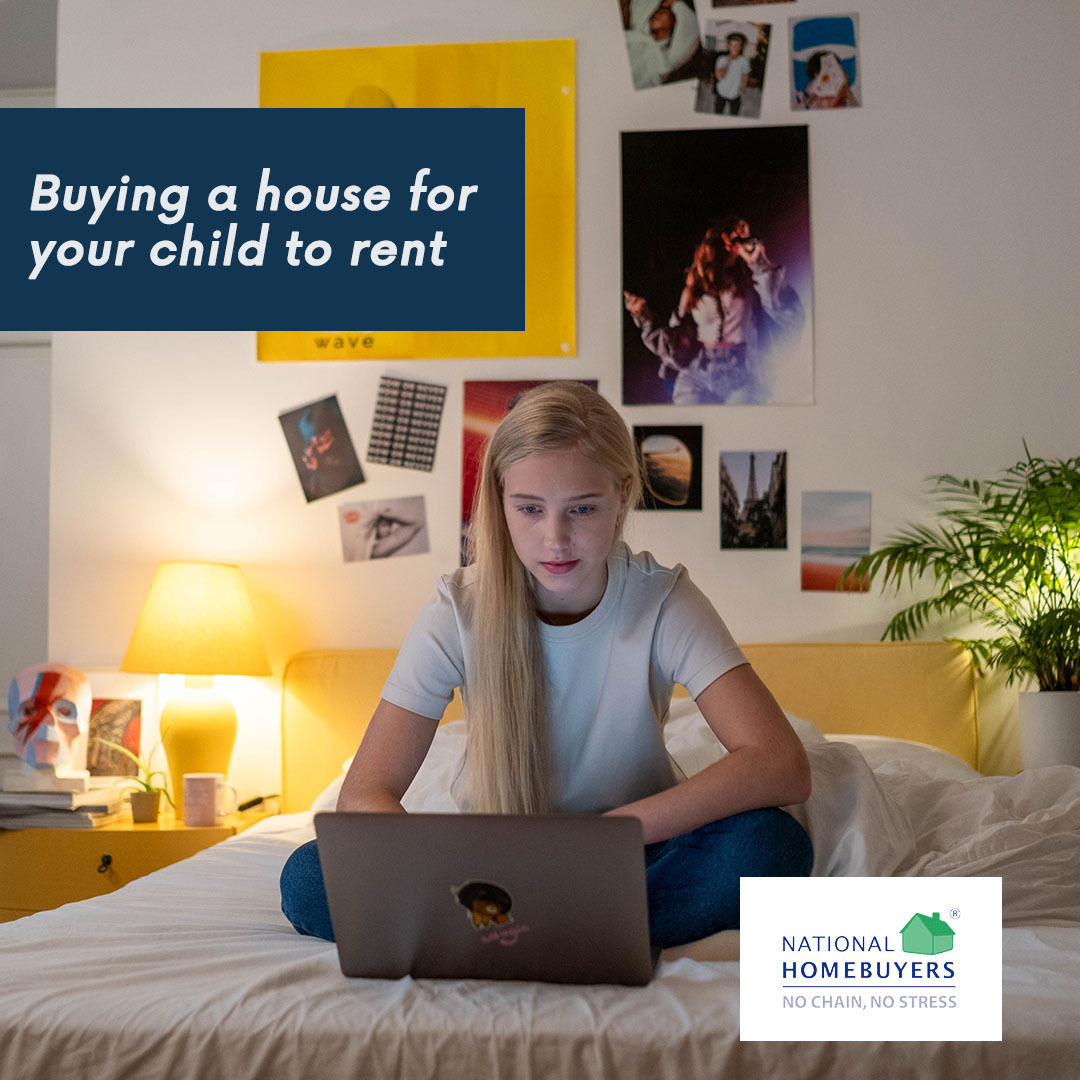
Buying a house for your child to rent
It’s never been trickier for young people to invest in their first home. Recent growth in first-time buyers has come with an average £53,935 deposit and an age of 32, according to recent figures from Halifax. So, if you’re a parent, have you considered buying a house for your child to rent?
Around one third of 25-34-year-olds rely on a gift or loan from the Bank of Mum and Dad or other family members to get onto the property ladder. But you may not want to simply donate to your children, or you might want to ensure that any money lent to them is formally repaid. And by owning a property you rent to your children, you’re investing in an asset which could be rented to other tenants, or sold when the time is right.
You might also be considering it when your children are heading to university, to ensure they can have access to quality, affordable accommodation.
If you already own a second property, then the option of renting to a family member is a little easier. But whatever situation you’re in, it’s always important to consider the benefits, drawbacks, and legal obligations, before you make a commitment.
The benefits of buying a house for your child to rent
Even the closest family relationships can become strained when children get older and continue to live at home. It’s only natural that they might want their own space and privacy, and as a parent, you might be looking forward to that day as well.
From your child’s perspective, it will typically mean they’ll get more stability and a higher standard of care and attention than from a private landlord or letting agency. And it also avoids the need for hefty deposits and guarantees. Finally, you’re less likely to inflate the monthly rental price, although many mortgages will require you to charge a minimum amount as part of the conditions.
And as a parent, you’re able to help your child without simply handing over money, or risking your home or savings as security for them to take out their own mortgage. Instead, you’ve got a formal way of being repaid over time for assisting them into their own home, and the fallback of selling or renting to other tenants if the property is no longer needed by them.
It sounds like an ideal situation for everyone, but there are some important legal and financial obligations to consider, along with other potential pitfalls, before you jump into buying a property for your children to rent.
The disadvantages of buying a house for your child to rent
If you’re taking out a mortgage for your second property, it will generally require a larger deposit. Often this will be around 25%, which can be a significant amount, especially when you’ll also be paying a 3% higher stamp duty surcharge on an additional home.
You’ll also be liable for income tax on any rental income you make, and most buy-to-let mortgages will require an interest cover ratio (ICR) or between 125-145%, which means the rent will need to be 25-45% higher than the monthly mortgage payments, although there are one of two exceptions.
If you are financially able to let a property to your children for below the market rate, there are some other tax implications to consider. For example, you might not be able to claim all the associated expenses if you can’t justify your ownership as ‘wholly for business purposes’, and there can also be complications regarding inheritance tax.
You’ll also have the same legal obligations as any other landlord, which means safety checks including gas, fire and electrics, energy efficiency requirements, and insurance. If you’re planning on letting your house to anyone alongside your children, then you’ll also need to obtain House in Multiple Occupation (HMO) licensing.
And potentially the biggest risk is mixing your relationship as a parent and child with that of landlord and tenant. While a formal tenancy agreement can help establish the ground rules, it’s important to consider what might go wrong before it happens. This includes what happens if a rental payment is missed, whether you can afford for your children to move out suddenly, or who is responsible for fixtures and fittings, maintenance and other potential costs and issues.
If your child is moving into the property with a partner or spouse, you also need to think about what might happen if they separate after starting their own family. In that situation, the ex-partner or spouse could be given the right to remain in the house. And there are restrictions around the benefits payable to anyone living in a property owned by a relative.
Alternatives to buying a house for your child to rent
There are other options worth considering before investing in a property to rent to your children, ranging from simply gifting an amount to taking on a joint mortgage.
The most obvious route will typically be offering a gifted deposit to enable children to borrow more, and this will be accepted by most banks. But you may need to provide written confirmation, and it can be subject to inheritance tax if you go beyond the annual allowance. So, it’s important to check with a financial advisor to make sure you avoid an unexpected bill.
Alternatively, you could loan the money. But while it’s relatively straightforward to set up a simple loan agreement to avoid disputes in the future, this will also need to be declared to any mortgage lender. Some banks won’t accept a borrowed deposit, and any approvals will include the loan repayments as part of the calculations for the mortgage amount.
Financial help can provide a big assistance for young first-time buyers. But it isn’t always the right choice, with a Legal & General study revealing almost one in five parents or grandparents have to accept a lower standard of living to help their families onto the housing ladder.
It’s possible to help your children without any financial cost. One option is to offer a portion of the equity in your home as security, which shouldn’t cost anything unless mortgage payments are missed, at which point you would become liable and your property may be at risk.
Another alternative is an offset mortgage, which reduces the interest amount by offsetting the loan amount against your parental savings. The downside is that you won’t be able to access that money until the mortgage term is completed.
Guarantor mortgages aren’t common, but they allow you to agree to cover the mortgage payments if your child fails to do so, and it’s possible to have yourself removed at a later date if your child can prove they’re able to take on the whole debt by themselves.
The final option is to take out a joint mortgage, which means you’re equally liable. And this also comes with the potential of additional stamp duty and capital gains tax liabilities.
Should you buy a house for your child to rent?
Every situation will be different, and it’s very important to get independent financial advice before entering into any property agreement with your children or other family members. Money matters can be a huge issue even in otherwise loving families, and you need to ensure you’re not hit by unexpected taxes or costs.
It’s important to understand all of the financial implications, and the legal obligations you’ll incur by becoming a landlord to your children. It might not seem necessary to draw up a formal rental agreement or to request a deposit, but these steps will often prevent arguments and disputes in the future. And you’ll also need to consider how to safeguard your child if you die or are declared bankrupt.
But most importantly, you need to consider your relationship with your children at every stage. While it might be financially beneficial to rent a property to them, or to assist them with home buying in other ways, you don’t want to fall out with your family in the process.
And if things do go wrong, make sure you’re aware of your options. Whether you’re in a rental agreement or joint mortgage with your children, if you need to end the arrangement quickly for any reason, then you can get a quick cash offer today. And along with a prompt completion, you can also potentially have up to £1,000 of your legal costs covered as well.